Module
LoRa
Long-range, low-power mesh-style telemetry for perimeter and area monitoring where there is no cell coverage.
868 / 915 MHz ISM
600 m line of sight
GNSS 10 m R95 · 75 g
600 m line of sight
GNSS 10 m R95 · 75 g


One intrinsically safe handheld, interchangeable smart cartridges. Go from broad VOC screening to benzene-specific measurement by swapping a cartridge in the field, not by buying another instrument.
Most teams carry two or three PIDs: one for survey, one for ppb-level hygiene work, one for benzene. Each has its own calibration schedule, its own spares, its own training. ModRAE collapses that into a single base unit.
Every quick-release cartridge carries its own lamp, electrode and SensorRAE readiness, so it stays biased on the shelf and reads the moment it locks in.
Four serviceable pieces: base unit, smart cartridge, pump and probe. Each one is designed to be removed, replaced or upgraded without tools, a bench, or sending the instrument away.
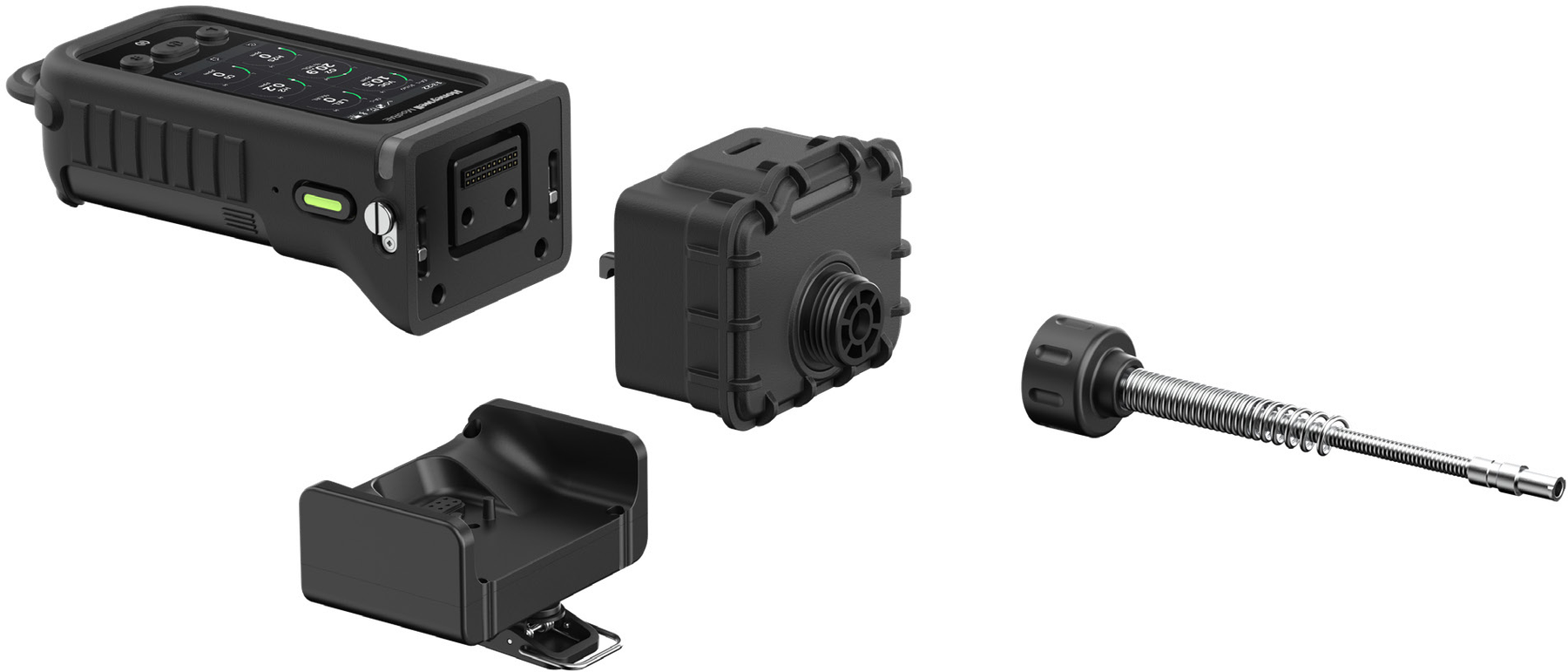
Slide-and-lock. The sensing module changes in seconds at the point of use, so one instrument moves from VOC survey to benzene work between calls.
Each cartridge keeps its sensors biased while it is out of the instrument. Store it, ship it, calibrate it on its own, and it is ready when it goes back in.
Field-replaceable, with a flow sensor that adjusts automatically. Low-flow warning below 210 cm³/min and a block alarm below 150 cm³/min.
BLE and NFC are standard. A LoRa or cellular module with GNSS installs in the field, so the fleet upgrades without a return to depot.
Seven PID configurations across three lamp energies, from 1 ppb hygiene work to 20,000 ppm spill response. All share a ≤5 second T90 and a 5 second warm-up.
Ranges are isobutylene-equivalent. Accuracy is specified from 20% to 150% of the lower calibration point. Response time T90 ≤5 s at 100 ppm isobutylene on every sensor. Lamp and electrode are the only service parts.
Continuous monitoring for the shift. Exposure metrics stay on screen so a hygienist or safety officer can act on the trend, not just the peak.
Targeted investigation. Survey detection with real-time graphing and object measurement, so sampling is repeatable from one responder to the next.
An award-winning interface on a 3.5-inch colour display, backed by alarms you cannot miss and a side button you can set to what matters on your calls.

Gauges turn with the hazard. TWA and STEL are a glance away, and an ambient light sensor keeps the backlight readable from a dark tank to a noon roadside.
Compound-specific measurement runs as a step-by-step routine, so a benzene sample taken by a new hire matches one taken by your senior tech.
95 dB buzzer, six LEDs both sides, two vibration motors. An accelerometer handles man-down, and the side button defaults to an SOS alarm or can trigger a fresh-air zero.
Two high-intensity white LEDs, a flow sensor for pump blockage, and a temperature, humidity and pressure sensor that every reading is corrected against.
Short-range links are built in. Long-range links are a module you add when the deployment calls for it, with GNSS position on both.
Bluetooth Low Energy and Near Field Communication on every unit, for configuration, data pulls and pairing without a cable.
Long-range, low-power mesh-style telemetry for perimeter and area monitoring where there is no cell coverage.
LTE with a nano SIM for live readings to Safety Suite from anywhere with a signal, no gateway on site.
Additional wireless approaches the platform supports for site networks and real-time remote monitoring across operations.
Integrated with Honeywell Safety Suite 2.0 for centralised device management, fleet-wide visibility into monitoring data, and the records a compliance audit asks for.
Ask about fleet setupThe same base unit covers hygiene, remediation and response. Change the cartridge, change the mode, keep the training.
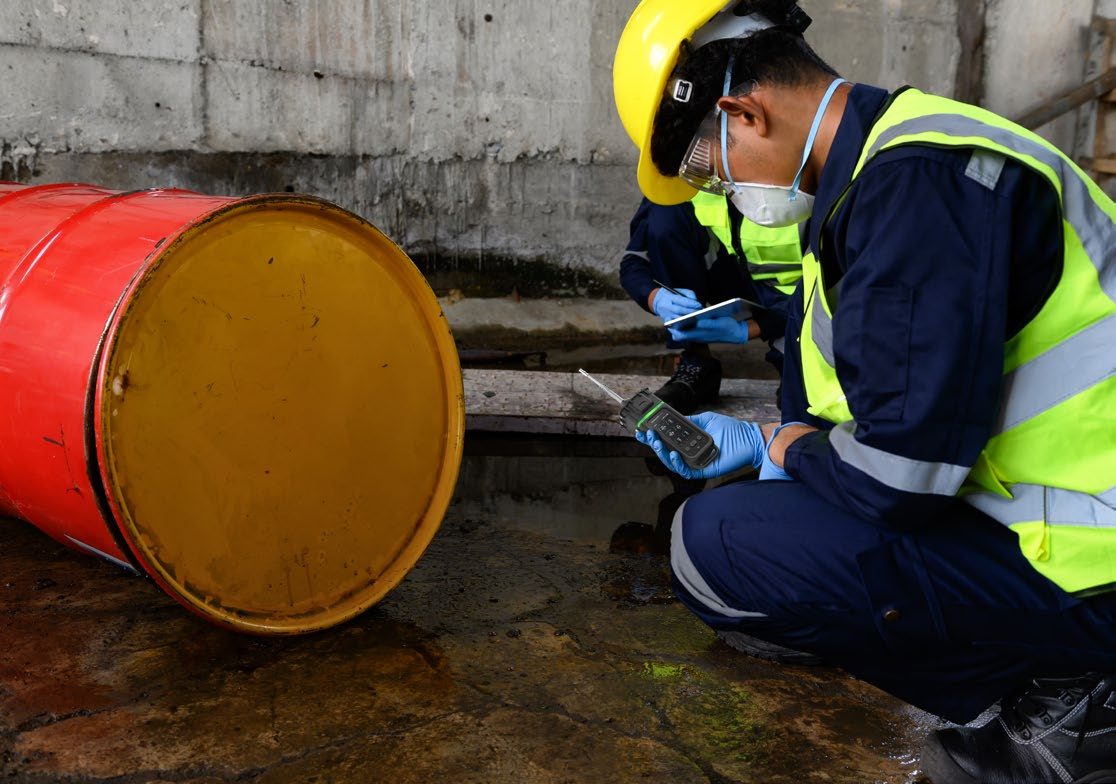
Monitor worker exposure to VOCs and other contaminants with TWA and STEL on screen.

Assess contamination and track cleanup progress with the 15,000 or 20,000 ppm sensor.
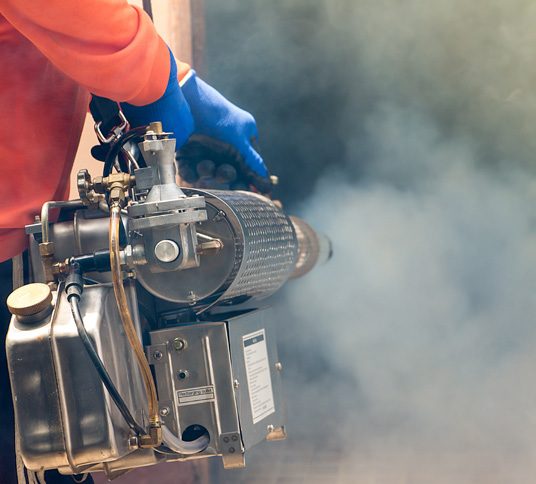
Monitor hazardous gases and support re-entry decisions with a documented log.

Size up unknown or high-risk environments at 45 m of sampling distance.

Identify and evaluate releases with real-time graphing in Safety Mode.

Improve visibility across larger sites with LoRa or cellular telemetry.
Download the datasheet below for the full document.
| Unit dimensions | 375 mm (L) × 83 mm (W) × 48/60 mm (H) — 14.76 × 3.27 × 1.89/2.36 in, including sensor probe and rubber boot |
|---|---|
| Weight (whole unit) | Approx. 975 g (2.15 lb), including base unit, sensor cartridge, hand strap, clip and rubber boot |
| Ingress protection | IP66 and IP68 (rating is for the entire product) |
| Operating temperature | −20 °C to +60 °C (−4 °F to 140 °F) |
| Operating pressure | 80 kPa to 120 kPa (11.6 to 17.40 PSI) |
| Operating humidity | 0% to ~95% RH |
| Display | 3.5 in TFT colour LCD (RGB), 480 × 800, white backlight, operating −20 °C to +60 °C |
| Controls | 3 front-panel buttons and 1 configurable side button |
| Side button functions |
|
| Standard connectivity | Bluetooth® Low Energy (BLE) and Near Field Communication (NFC), standard on all devices |
| Integrated sensors |
|
| Audio alarm | Buzzer, 95 dB at 30 cm (11.8 in) |
| Visual alarm | 6 LEDs, 3 each side, switching synchronously |
| Vibration | 2 internal vibration motors |
| Flashlight | 2 high-intensity white LEDs |
| Sampling interval | 1 to 3,600 seconds (default 60 s) |
| Datalog capacity | Up to 180 days at a 60 s interval (8 h/day operation, 2 min/day alarm events, 2 power cycles/day) |
| Pump | Serviceable diaphragm pump, easy replacement; 300 cm³/min (10.1 fl oz/min) with automatic flow adjustment |
| Flow sensor | <210 cm³/min triggers low-flow warning; <150 cm³/min triggers pump-block alarm |
| Pump life | More than 200 calendar weeks (8 h/day, 5 days/week) |
| Sampling modes | Pump mode, with or without a gas probe; supports a single separation-tube cartridge and a water trap |
| Maximum sampling distance | 45 m (147.64 ft) |
| Cartridge replacement | Quick-release, slide-and-lock; the sensor cartridge can be changed or replaced in the field |
| Sensor bias backup | A coin cell keeps the sensors biased while the cartridge is removed from the instrument |
| Battery type | Polymer Li-ion rechargeable, 3.7 V, 5,700 mAh |
|---|---|
| Runtime | >12 hours worst-case at room temperature; >10 hours worst-case at −20 °C Worst case = continuous measurement, all sensors installed including 1 PID and 2 high-power sensors, backlight on outdoors, 2 min/day of alarm, wireless module enabled |
| Charging time | <5.5 h at 10 to 30 °C (50 to 86 °F); <7.5 h at 0 to 10 °C and 30 to 40 °C. Charging suspends automatically below 0 °C or above 40 °C |
| Charging current | 1.6 A at 10 to 30 °C; 1.0 A at 0 to 10 °C and 30 to 40 °C |
| Charging indicators | 2 LEDs on battery sides |
| Standby | Approx. 80% capacity retained after 2 weeks in storage |
| Cellular wireless module | |
|---|---|
| Dimensions / weight | 97 × 62 × 40.4 mm (3.82 × 2.44 × 1.59 in) · approx. 130 g (4.59 oz) |
| Bands | LTE-FDD: B1/B2/B3/B4/B5/B7/B8/B12/B13/B18/B19/B20/B25/B26/B28/B66 · LTE-TDD: B34/B38/B39/B40/B41 |
| SIM | Physical uSIM, 4FF (nano) |
| GNSS | GPS/QZSS, Galileo, GLONASS, BeiDou · position accuracy 10 m (32.8 ft) R95 |
| LoRa wireless module | |
| Dimensions / weight | 97 × 48 × 35.8 mm (3.82 × 1.89 × 1.41 in) · approx. 75 g (2.65 oz) |
| Frequencies | 868 MHz / 915 MHz ISM bands |
| Range | Line of sight 600 m (to external antenna) |
| GNSS | GPS/QZSS, Galileo, GLONASS, BeiDou · position accuracy 10 m (32.8 ft) R95, outdoor |
| Standard | |
| Short range | Bluetooth® Low Energy (Bluetooth SIG qualified D047102) and NFC on all devices |
| US & Canada | Class I, Division 1, Groups A, B, C & D, T4; Ex ia IIC T4 Ga; Class I, Zone 0, AEx ia IIC T4 Ga, −20 °C to 60 °C (CSA 26CA80282060X) |
|---|---|
| IECEx | Ex ia IIC T4 Ga, −20 °C to 60 °C (IECEx CSA 26.0034X) |
| ATEX | II 1G Ex ia IIC T4 Ga, −20 °C to 60 °C (CSA Ne26ATEX1097X) |
| Wireless approvals | RE-D, FCC ID, IC, RCM |
| EMC | EN 50270; 47 CFR Part 15; ANSI C63.4; ICES-003 |
| RoHS | EU RoHS Directive (EU) 2015/863; UAE RoHS Regulation (Decision No. 10 of 2017) |
| REACH | Entry 20 of Regulation (EU) No 276/2010 |
| TSCA | US EPA Toxic Substances Control Act compliance |
| BCS | Federal Regulated Battery Charger System, 10 C.F.R. Section 430.23(aa) |
| Bluetooth | Bluetooth SIG qualified (D047102) |
| PID sensor | 10.6 eV | 10.6 eV | 10.6 eV | 10.6 eV | 10.6 eV | 9.8 eV | 11.7 eV |
|---|---|---|---|---|---|---|---|
| Range (isobutylene) | 100 ppm | 2,000 ppm | 5,000 ppm | 15,000 ppm | 20,000 ppm | 5,000 ppm isobutylene 200 ppm benzene | 5,000 ppm |
| Resolution | 1 ppb @ ≤100 ppm | 100 ppb @ ≤1,000 ppm 1 ppm @ >1,000 ppm | 10 ppb @ ≤1,000 ppm 100 ppb @ >1,000 ppm | 100 ppb @ ≤5,000 ppm 1 ppm @ >5,000 ppm | 1 ppb @ ≤100 ppm 10 ppb @ 100–1,000 ppm 100 ppb @ 1,000–10,000 ppm 1 ppm @ >10,000 ppm | 1 ppb @ ≤100 ppm 10 ppb @ 100–1,000 ppm 100 ppb @ >1,000 ppm | 0.1 ppm @ ≤100 ppm 1 ppm @ 100–1,000 ppm 10 ppm @ >1,000 ppm |
| Accuracy* | ±10% | ±15% | ±15% | ±15% @ ≤5,000 ppm ±20% @ >5,000 ppm | ±15% @ ≤5,000 ppm ±20% @ >5,000 ppm | ±15% @ ≤1,000 ppm ±20% @ >1,000 ppm | ±15% @ ≤1,000 ppm ±20% @ >1,000 ppm |
| Span (default, user configurable) | Low 10 ppm High 100 ppm | Low 100 ppm High 1,500 ppm | Low 100 ppm High 4,000 ppm | Low 100 ppm High 12,000 ppm | Low 100 ppm High 15,000 ppm | Low 100 ppm High 4,000 ppm | Low 100 ppm High 4,000 ppm |
| Lamp life | ≥10,000 h | ≥10,000 h | ≥10,000 h | ≥10,000 h | ≥10,000 h | ≥10,000 h | ≥500 h |
| Temperature range | −20 °C to +60 °C (−4 °F to 140 °F) | 0 °C to 60 °C (32 °F to 140 °F) | |||||
| Temperature effect | ±20% | ±10% at calibration point (isobutylene at 20 °C, 1 atm) | |||||
| Common | Response time T90 ≤5 s @ 100 ppm isobutylene · warm-up 5 s · ø21.4 × 24.8 mm, <20 g · 5-pin output (Vcc, CS, Tx, Rx, GND) · 4.4 ±0.1 VDC, 50 mA average / 60 mA peak · humidity 0–95% RH non-condensing, effect ±20% RH · 80–120 kPa · IECEx Ex ia IIC Ga · service parts: lamp, electrode | ||||||
* Accuracy values are specified for measurements from 20% to 150% of the lower calibration point.
The ModRAE datasheet and brochure, and the FarrWest service that stands behind every Honeywell instrument we sell.
Instrument, battery, wireless, certification and sensor specifications.
Platform overview, modular architecture, interface and application summary.
FarrWest is a Honeywell Authorized Service Provider for RAE Systems instruments. Calibration, repair and warranty service, handled in-house.
Tell us the missions and the compounds you care about. We will come back with a cartridge configuration, connectivity recommendation and a quote, usually the same business day.