

Teledyne FLIR · Biological detection for UAS
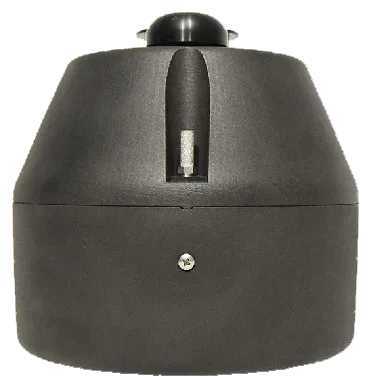
FLIR MUVE B330
Continuous Biological Detector and Collector for Unmanned Aerial Systems
A payload that samples the air while the aircraft flies. The B330 is purpose-designed for unmanned aerial systems to provide real-time continuous monitoring of biological threats while on the move. Teledyne FLIR built it on the IBAC product line's design and performance, in a SWaP-optimized configuration, and puts alarm and collector status straight onto the pilot's Mission Control Station display.
<100particles/L of air sensitivity
<5 minsCold start time
16 GBInternal storage
<8 hrsTraining requirement
UV LIFUV Laser Induced Fluorescence (LIF)
Applications
Food Safety / Contamination Detection
Disease Monitoring
Homeland Security
Defense

Assess the scene from a safe distance
Fly in for an initial assessment.
"When dangerous conditions exist, or are anticipated, utilize the MUVE B330 to fly in for an initial assessment." Teledyne FLIR
Detect, then collect
Two air paths, one alarm between them
The B330 does two jobs with two subsystems. The detector samples continuously while the payload is in operation. When it alarms, the integrated collector starts and captures a dry sample on a disk, so the team gets both an early warning from the detector in the air and a sample from the collector to recover.
Stage 1 · Continuous when in operation
Detector
Continuous air sampling provides real-time feedback of conditions.
- Technology
- UV Laser Induced Fluorescence (LIF)
- Sample phase
- Aerosol; flow rate 4.0 L/min (0.14 ft3/min)
- Threats
- Spores, vegetative bacteria, viruses, and toxins; particle size: 0.7 – 10 microns
- Sensitivity
- <100 particles/L of air
- Sampling
- Continuous sampling when in operation
Alarm triggers collector
Stage 2 · On alarm
Integrated collector
Automated sample collection upon alarm indication.
- Sample method
- Dry collection
- Max flow rate
- 30 L/min
- Particle size
- 1 to 10 microns
- Collection media
- Sample Disk
- Power
- 2 watts
Stage 3 · Recovery
Sample recovery
The pilot gets positive confirmation that a sample is being collected; the sample is then recovered from the disk.
- Recovery
- Sample extraction from sample disk in vial with liquid buffer
The pilot's view
Alarms land on the MCS piloting interface
Sensor display is provided via the Mission Control Station (MCS) piloting interface. Alarming conditions and collector status are displayed to the pilot, both to alert them to a threat and to confirm that a sample is being collected.
Illustration of the alarm, diagnostics and collector status outputs and MCS map pin drops.
- 01
Assess the scene from a safe distance
- Allows for informed decision making prior to approaching a hazardous scene.
- Locate source of threat and track progression as the scene unfolds.
- 02
Significantly reduce time to action
- Rapidly deploy in a matter of minutes.
- Cover difficult terrain from the air to assess threat.
- Make a quick assessment of the threat perimeter.
- Alarm will initiate upon detection of hazardous conditions.
- 03
Fully integrated situational awareness
- Mission Control Station (MCS) application provides plug-and-play operation of the MUVE B330 payload.
- Visually display threats on the map within MCS using easy to understand pin drops.
- Gather a comprehensive overview of an active scene utilizing visuals and B330 indications.
Platforms & family
Where the B330 flies first
Teledyne FLIR names the SkyRanger R70 and the R80D SkyRaider as the platforms for the initial deployment of the B330 payload. Ask us about other airframes.
Initial deployment platform
SkyRanger R70
One of the two Teledyne FLIR aircraft named as initial deployment platforms for the MUVE B330.
View the SkyRanger R70 Initial deployment platformR80D SkyRaider
The second aircraft Teledyne FLIR names for the initial deployment of the payload.
View the R80D SkyRaider
Biological detection family
The B330 leverages the legacy design and performance of the IBAC product line in a SWaP-optimized configuration. Teledyne FLIR lists it alongside IBAC 1 and IBAC 2 in its biological detection range.
- MUVE B330
- IBAC 1
- IBAC 2
Specifications
MUVE B330 specifications
| Detection | |
|---|---|
| Technology | UV Laser Induced Fluorescence (LIF) |
| Sample introduction | Airborne particles; triggered aerosol sample collector |
| Sample phase | Aerosol; flow rate 4.0 L/min (0.14 ft3/min) |
| Threats | Spores, vegetative bacteria, viruses, and toxins; particle size: 0.7 – 10 microns |
| Sensitivity | <100 particles/L of air |
| Sampling and analysis | Continuous sampling when in operation |
| Sample collection | Integrated sample collection |
| Integrated collector | |
|---|---|
| Sample method | Dry collection |
| Power consumption | 2 watts |
| Max flow rate | 30 L/min |
| Particle size | 1 to 10 microns |
| Collection media | Sample Disk |
| Sample recovery | Sample extraction from sample disk in vial with liquid buffer |
| Power | |
|---|---|
| Input voltage | 16 - 36 VDC |
| Power consumption | 10W (normal operation), 12W (collector running) |
| Cold start time | <5 mins |
| Environment | |
| Operating temperature (ambient) | -26 to 120 °F (-32 to 49 °C) |
| Operating humidity | 5 to 99%, non-condensing |
| Storage temperature | -38 to 126 °F (-39 to 52 °C) |
| Physical | |
|---|---|
| Dimensions (L x W x H) | 7.6 x 7.6 x 8.5 in (19.3 x 19.3 x 21.6 cm) |
| Weight | 3.17 lbs (1.44 kg) |
| Enclosure | Windform® SP (Composite polyamide based, carbon filled) |
| Interface & data | |
| Communication | Ethernet |
| Display and alerts | Mission Control Station (MCS) |
| Outputs | Alarm Status, Diagnostics Status, Collector Status |
| Data storage | 16 GB internal storage |
| Training requirements | <8 hrs |
ExportTeledyne FLIR notes that this product may be subject to the International Traffic in Arms Regulations (ITAR) or the Export Administration Regulations (EAR) depending upon specifications for the final product; jurisdiction and classification will be provided upon request.
Resources
Questions and support
Download the official Teledyne FLIR MUVE B330 datasheet. Our team can also answer configuration and platform questions directly.
Datasheet
MUVE B330 datasheet
The official Teledyne FLIR Defense datasheet for your evaluation or procurement file.
Request a quoteTalk to FarrWest
Ask about the MUVE B330, its initial deployment platforms and how it fits your program.
PlatformSkyRanger R70
One of the two aircraft Teledyne FLIR names as initial deployment platforms for the B330.
PlatformR80D SkyRaider
The other aircraft Teledyne FLIR names as an initial deployment platform for the B330.
ServiceRepair Depot
When a repair or calibration falls outside our in-house scope, we coordinate directly with the manufacturer and manage the logistics end to end.
FAQ
Common questions
What does the MUVE B330 detect?
Its threat classes are "Spores, vegetative bacteria, viruses, and toxins; particle size: 0.7 – 10 microns", with a sensitivity of <100 particles/L of air, using UV Laser Induced Fluorescence (LIF). It is positioned for biological threats and alarms on detection.
What happens when it alarms?
Alarm will initiate upon detection of hazardous conditions, followed by automated sample collection upon alarm indication. The integrated collector uses dry collection onto a Sample Disk, and the sample is recovered by extraction from the disk in a vial with liquid buffer. The pilot sees alarm and collector status on the Mission Control Station (MCS).
How is it related to IBAC?
Teledyne FLIR says the B330 leverages the legacy design and performance of the IBAC product line in a SWaP-optimized configuration. IBAC 1 and IBAC 2 are listed beside it in the Teledyne FLIR biological detection range.
Which aircraft carry it?
The SkyRanger R70 and the R80D SkyRaider are named as the platforms for the initial deployment of the B330 payload. See the SkyRanger R70 or the R80D SkyRaider, or ask us about other aircraft.
How quickly can it be in the air, and how much training does it take?
Teledyne FLIR describes it as able to rapidly deploy in a matter of minutes, with a cold start time of <5 mins. Training requirements are <8 hrs, and the payload is designed to be intuitive, easy to use, and require minimal maintenance.
Are there export restrictions?
Teledyne FLIR notes the product may be subject to ITAR or EAR depending upon specifications for the final product, with jurisdiction and classification provided upon request. Contact us early in your purchasing process.
How much does it weigh?
The weight is 3.17 lbs (1.44 kg). Dimensions are 7.6 x 7.6 x 8.5 in (19.3 x 19.3 x 21.6 cm). Request a quote if you need configuration details.
Why FarrWest
Buying from FarrWest
Cooperative contracts
BuyBoard & PCA vendor
FarrWest is a pre-approved vendor on BuyBoard and Purchasing Cooperative of America (PCA). Government agencies can buy on competitively-bid cooperative contracts, with no lengthy RFP.
ServiceService after the sale
OEM-certified service and support on every product we deliver: functional checks and certified calibration on the manufacturer’s required cycle, back in service in 48–72 hours typical.
Since 2004Woman-owned, HUB-certified
Serving Hazmat, Fire, Police, EMS, and Specialty Vehicle operations nationwide since 2004, with expert support, training, and service after the sale.
Next step
Put a detector and collector in the air
Tell us about your aircraft, your mission and your timeline, and our team will follow up on the MUVE B330.