

Photoionization Detectors
A photoionization detector picks up volatile organic compounds at levels far below what an LEL sensor registers, from parts per billion to thousands of ppm. Here you'll find Honeywell handhelds (MiniRAE 3000+, MiniRAE Lite+, ppbRAE 3000+, UltraRAE 3000+ and the cartridge-based ModRAE), mPower's NEO and NEO Benzene, multi-gas monitors with a PID sensor, and the Teledyne Detcon PI-700 fixed VOC sensor.
Hazmat teams, industrial hygienists and refinery safety crews rely on them for leak detection, remediation and benzene checks. FarrWest is a Honeywell Authorized Service Provider for RAE Systems instruments.
Tax-exempt
Tax-exempt agency or organization?Set up a tax-exempt FarrWest account and skip sales tax at checkout. One certificate, every order.
Apply for tax-exempt status →Featured Photoionization Detectors equipment
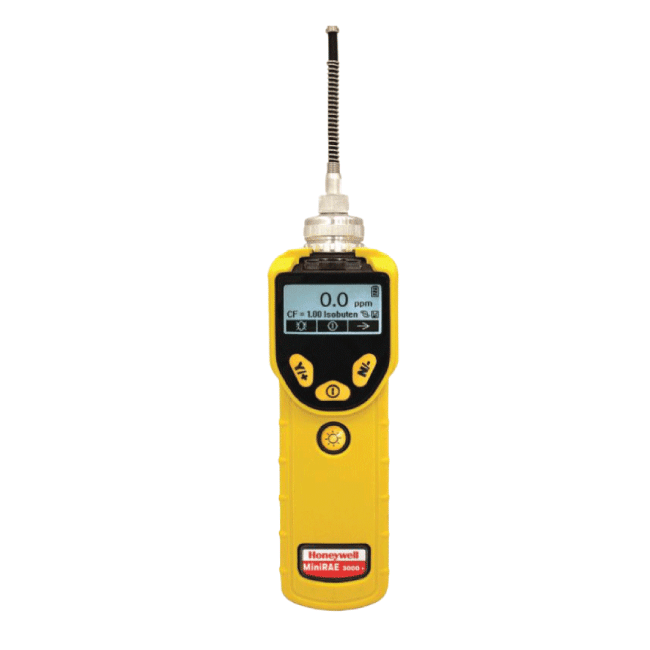
Honeywell MiniRAE 3000+ – High-Range VOC Detector with 15,000 ppm PID
The Honeywell MiniRAE 3000+ is a portable handheld VOC monitor with a 15,000 ppm PID, real-time connectivity, and low-maintenance access to the lamp and sensor for hazmat, leak detection, and remediation work.
$0.00
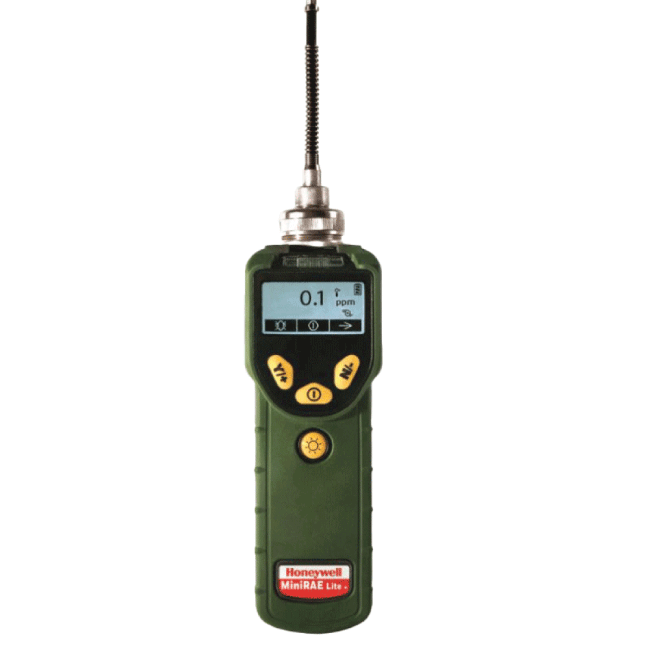
Honeywell MiniRAE Lite+ – Rugged VOC Monitor for Leak Detection and Remediation
Honeywell MiniRAE Lite+ is a rugged, portable VOC monitor with 0–5,000 ppm PID detection and a built-in flashlight, suited to leak detection and remediation work.
$0.00
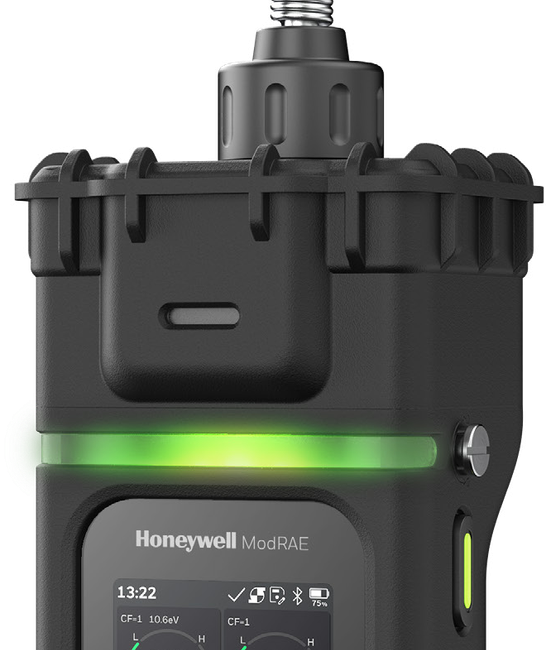
Honeywell ModRAE – Advanced Modular Portable Gas Detection Platform
One intrinsically safe handheld, interchangeable smart cartridges. Go from broad VOC screening to benzene-specific measurement by swapping a cartridge in the field, not by buying another instrument. Seven PID sensor options from 9.8 to 11.7 eV, IP66/68, more than 12 hours of runtime, BLE and NFC standard with field-installable LoRa or cellular modules.
$0.00

Honeywell ppbRAE 3000+ – Advanced Handheld VOC Monitor with ppb Sensitivity and Wireless Connectivity
The Honeywell ppbRAE 3000+ is a handheld VOC monitor with ppb-level sensitivity and wireless connectivity.
$0.00
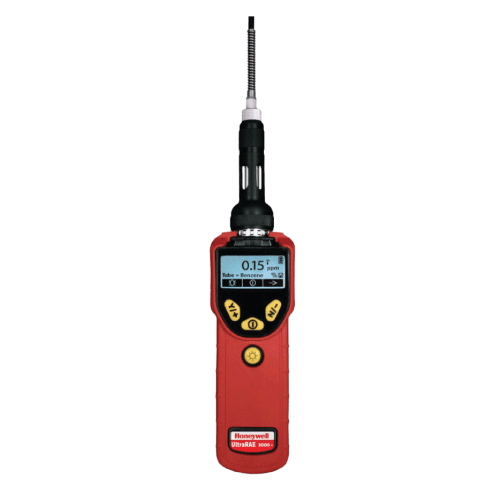
Honeywell UltraRAE 3000+ – Benzene & VOC Compound-Specific Monitor with Extended PID Detection
Honeywell UltraRAE 3000+ is a benzene and VOC compound-specific monitor with extended PID detection and dual detection modes for hazmat and refinery safety.
$0.00

MultiRAE Benzene
6-gas wireless monitor combining benzene-specific "snapshot" PID measurement with ~20 interchangeable sensors
$0.00

NEO Benzene
The mPower NEO Benzene is a PID monitor designed for industrial safety professionals requiring targeted aromatic VOC and benzene detection with wireless connectivity.
$0.00

NEO Photo-ionization Detectors
The NEO Photo-ionization Detector from mPower Electronics is a handheld VOC detector using PID technology with parts-per-billion sensitivity for industrial safety and hazmat response.
$0.00

NEO PID
The mPower Electronics NEO PID is a handheld photoionization detector for detecting volatile organic compounds in industrial hygiene, environmental testing, and hazmat applications.
$0.00
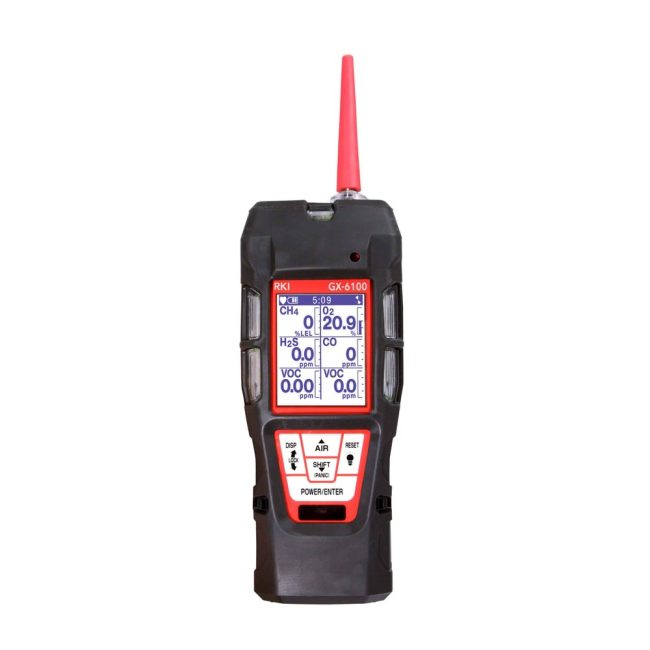
RKI GX-6100 Six-Gas Sample-Draw Monitor with PID & Bluetooth
Compact six-gas sample-draw monitor: standard LEL/O2/H2S/CO plus two smart slots for PID, IR or toxic sensors, with a built-in pump and Bluetooth alert sharing.
$0.00
How to choose a PID
Range and sensitivity
Start with the concentrations you expect. For low-level exposure work, the Honeywell ppbRAE 3000+ and mPower NEO read at parts-per-billion sensitivity. For spills, leak hunting and remediation, where readings climb fast, the MiniRAE 3000+ carries a 15,000 ppm PID and the MiniRAE Lite+ covers 0–5,000 ppm with a built-in flashlight.
Broadband VOC or compound-specific
A standard PID responds to many VOCs at once and shows one total reading, normally referenced to isobutylene. That makes it fast for screening, but it cannot separate benzene from the other vapors around it. When benzene is the question, use a compound-specific instrument: the UltraRAE 3000+, the MultiRAE Benzene, the mPower NEO Benzene, or the ModRAE, which moves from broad VOC screening to benzene measurement by swapping a cartridge in the field. Lamp energy matters too. The 10.6 eV lamp is the general-purpose standard. An 11.7 eV lamp ionizes a wider range of compounds but wears faster, and a lower-energy lamp is more selective. The ModRAE offers seven PID sensor options from 9.8 to 11.7 eV.
Handheld, multi-gas or fixed
If crews already carry a 4-gas monitor, an instrument with a PID slot puts VOC readings on the same screen. The GasAlertMicro 5 PID and Honeywell MultiRAE both work this way; see our multi-gas monitors. For continuous coverage at one point in a hazardous area, the Teledyne Detcon PI-700 mounts as a fixed VOC sensor alongside other fixed gas detection systems.
Keeping a PID accurate
A PID needs regular calibration, usually with isobutylene and a zero gas, plus periodic cleaning of the lamp window and sensor, since contamination and humidity pull readings down. Instruments with easy lamp and sensor access, like the MiniRAE 3000+, make that routine quicker. Stock matching calibration gas, and send RAE Systems instruments covered by a Honeywell Service Made Simple Enhanced agreement to our depot for Honeywell warranty repair and calibration with genuine Honeywell parts. Other PIDs go through the Repair Depot with OEM-certified technicians.
Frequently asked questions
What does a photoionization detector measure?
A photoionization detector (PID) measures volatile organic compounds and some other gases. An ultraviolet lamp ionizes molecules in the sample, and the resulting current is proportional to concentration. PIDs read from parts per billion up to thousands of ppm, so they show toxic exposure levels for fuels, solvents and industrial chemicals that a combustible-gas (LEL) sensor would not register.
What is the difference between a PID and an LEL sensor?
An LEL sensor reports combustible gas as a percentage of the lower explosive limit, so it answers whether an atmosphere can ignite. Many VOCs become a health hazard at concentrations far below the point where an LEL sensor shows a reading. A PID measures those vapors in ppm or ppb, which is why hazmat teams carry one alongside, or built into, their 4-gas monitor.
Can a PID identify a specific chemical?
A standard PID cannot. It reports all ionizable compounds as one total, referenced to its calibration gas, usually isobutylene. If you already know the chemical, a correction factor converts the reading. To measure benzene on its own, use a compound-specific instrument such as the Honeywell UltraRAE 3000+, MultiRAE Benzene, mPower NEO Benzene or a ModRAE fitted with a benzene cartridge.
Which PID lamp energy should I choose?
The 10.6 eV lamp is the general-purpose choice and detects most common VOCs. An 11.7 eV lamp ionizes compounds with higher ionization energies, at the cost of shorter lamp life. A 9.8 eV lamp is more selective and responds to fewer compounds. The Honeywell ModRAE offers seven PID sensor options from 9.8 to 11.7 eV on interchangeable cartridges, so one handheld can cover several lamp choices.
How often should a PID be calibrated?
Calibrate a PID on the manufacturer's schedule and whenever it fails a bump test or reads unexpectedly low. Calibration normally uses isobutylene span gas and a zero gas. Dust, vapor residue and humidity on the lamp window reduce response, so cleaning the lamp and sensor is part of routine upkeep. FarrWest's Repair Depot calibrates PIDs and ties each certificate to the instrument's serial number.