

Thermal Imaging Cameras
Firefighters reach for a thermal imaging camera to search for victims, find the seat of a fire and check walls and ceilings for hidden heat. This category carries the FLIR K-series, from the compact K1 and K2 through the K33, K45, K53 and K55 to the K85-N certified to NFPA 1930:2025. It also includes FLIR's E8 Pro, E96 and C5 inspection cameras and the Scion PTM466 thermal monocular for patrol and tactical work.
Fire departments and public safety agencies can order through FarrWest's BuyBoard or PCA contracts without a separate bid.
Tax-exempt
Tax-exempt agency or organization?Set up a tax-exempt FarrWest account and skip sales tax at checkout. One certificate, every order.
Apply for tax-exempt status →Featured Thermal Imaging Cameras equipment
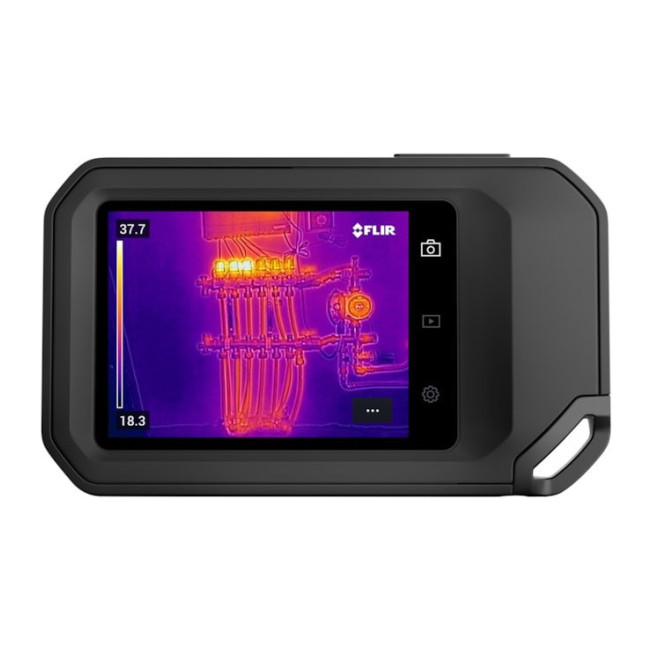
FLIR C5
*FLIR.* Pocket-size 160×120 handheld thermal camera with Wi-Fi/cloud; electrical/mechanical and grounding-hardware inspection at industrial sites.
Part # 89401-0202
$649.00
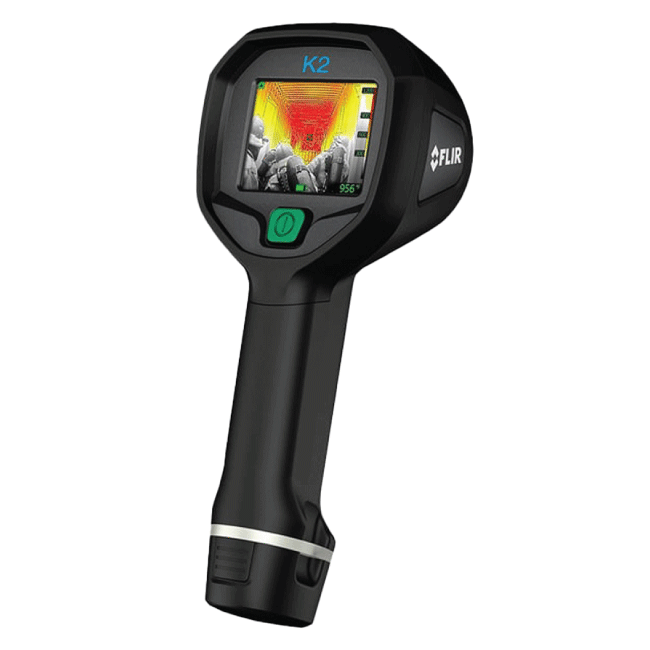
FLIR K2 – Compact and Affordable TIC with MSX® Imaging for Firefighters
A compact, budget-friendly thermal imaging camera built for firefighters, pairing FLIR's MSX imaging with rugged, high-heat-tolerant construction.
$1,049.00
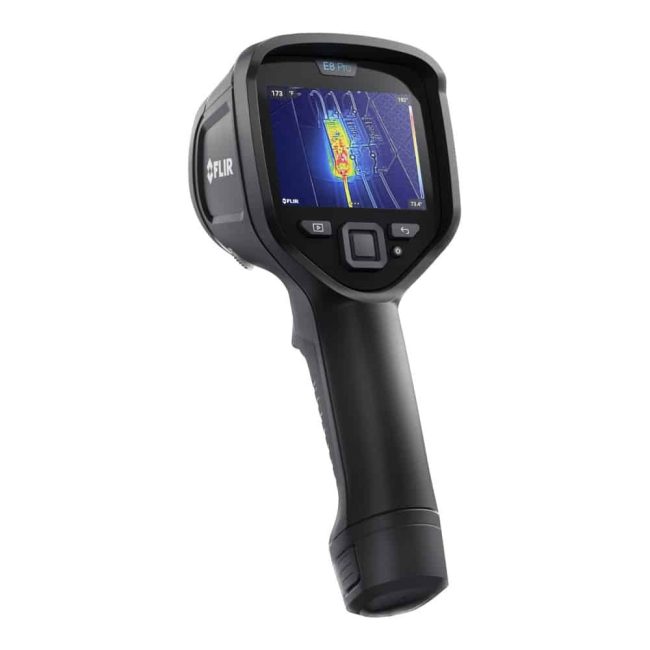
FLIR E8 Pro
The FLIR E8 Pro is a professional handheld thermal imaging camera designed for electrical, mechanical, and building inspections with MSX enhancement and cloud connectivity.
Part # 13303-0302
$0.00

FLIR E96
*FLIR.* Advanced 640×480 handheld thermal imager with interchangeable lenses for high-resolution industrial/electrical inspection.
$0.00

FLIR K33 – Budget-Friendly Thermal Imaging Camera with FSX® Enhancement
The FLIR K33 is a budget-friendly thermal imaging camera with 240 x 180 resolution and FSX enhancement for improved firefighter situational awareness.
Part # TFLK33
$0.00
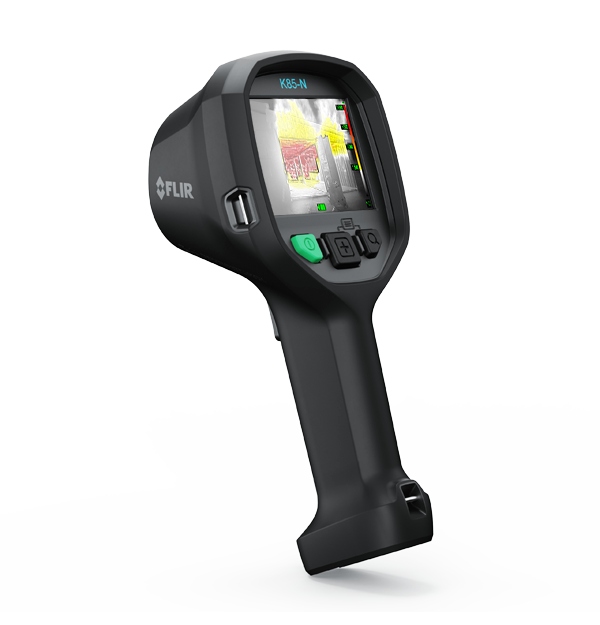
FLIR K85-N NFPA 1930:2025 Certified Thermal Imaging Camera – 640 × 480
The FLIR K85-N is a firefighting thermal imaging camera certified to NFPA 1930:2025. It pairs 640 × 480 resolution with a single-range imaging solution from -20°C to 650°C (-4°F to 1202°F), so crews see critical detail in smoke and high heat without switching ranges.
Part # 18703-0301
$0.00
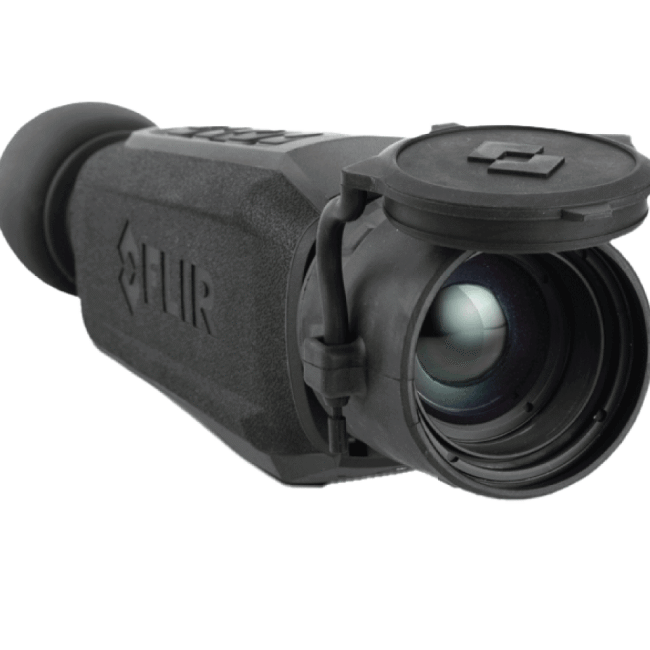
FLIR Scion PTM466 (60Hz) Thermal Monocular – 640×512, 36mm Lens, IP67 Rated
The FLIR Scion PTM466 is a 640x512 thermal monocular with a 36mm lens, 8x digital zoom, and IP67 rugged protection for tactical field use.
$0.00
Picking a thermal imaging camera
Fireground cameras: resolution and image processing
Resolution sets how much detail you see, especially at distance. The FLIR K33 images at 240 × 180, the K55 at 320 × 240 with a 60 Hz refresh rate, and the K85-N at 640 × 480. Image processing matters as much as pixel count. The K33, K53 and K55 use FLIR's FSX enhancement for sharper scenes, while the K2 uses MSX, which adds visible-light edge detail to the thermal image. The K85-N runs a single imaging range from -20°C to 650°C (-4°F to 1202°F), so crews keep detail in smoke and high heat without switching ranges. Our FLIR K2 vs K33 vs K85-N comparison walks through the trade-offs.
Matching cameras to crews
Budget-friendly models such as the K2, K33 and K45 make it practical to put a camera on more apparatus, so every company has one. The K1 is a compact unit aimed at commanders and inspectors sizing up a scene through smoke and darkness. Engine and truck companies that work interior often want the extra resolution of the K55 or K85-N. Plan battery charging and storage on the rig as part of the purchase.
Inspection cameras for fire prevention and facilities
FLIR's E-series and C5 are built for electrical, mechanical and building inspection rather than firefighting. The E8 Pro adds MSX and cloud connectivity, the E96 offers 640 × 480 resolution with interchangeable lenses, and the pocket-size C5 (160 × 120) shares images over Wi-Fi.
Thermal for patrol and tactical teams
Law enforcement and tactical teams use handheld thermal to search open ground and track subjects at night. The FLIR Scion PTM466 monocular pairs a 640 × 512 sensor with a 36 mm lens, 8x digital zoom and IP67 protection. More thermal options for patrol use are in thermal imaging optics. Agencies can buy through BuyBoard or PCA, and the quote request form covers multi-camera fleet orders.
Frequently asked questions
Can a thermal imaging camera see through smoke?
Yes. Firefighting thermal imaging cameras detect long-wave infrared heat, which passes through smoke that blocks visible light, so crews can see room layout, victims and fire spread in conditions where a flashlight shows nothing. They cannot see through walls or glass. A wall that reads hot shows heat conducted to its surface, which is why crews use cameras to find hidden fire in walls and ceilings.
What is the difference between FSX and MSX on a FLIR camera?
FSX (Flexible Scene Enhancement) is FLIR image processing that sharpens detail and contrast in the thermal image; it appears on the FLIR K33, K53 and K55. MSX (Multi-Spectral Dynamic Imaging) uses a built-in visible-light camera to add edge outlines, text and other detail to the thermal picture; it appears on the FLIR K2 and E8 Pro.
How much resolution does a firefighting thermal camera need?
More resolution shows more detail at a distance, which helps when scanning large rooms, warehouses or exterior walls. The FLIR K33 images at 240 × 180, the K55 at 320 × 240 and the K85-N at 640 × 480. Lower-resolution cameras are fine for close-in search and overhaul, so many departments mix models across apparatus based on how each company works.
What sets the FLIR K85-N apart from other FLIR K-series cameras?
The FLIR K85-N is certified to NFPA 1930:2025 and has 640 × 480 resolution, the highest of the K-series cameras in this category. It uses a single imaging range from -20°C to 650°C (-4°F to 1202°F), so crews keep critical detail in smoke and high heat without switching between ranges. Departments that write NFPA certification into their specifications can shortlist it.
Is a thermal monocular useful for patrol officers?
A handheld thermal monocular lets an officer scan fields, tree lines and dark structures for a person's heat signature without using a light. The FLIR Scion PTM466 has a 640 × 512 sensor, a 36 mm lens, 8x digital zoom and IP67 protection for field use. Because it is handheld, it can be used for searches without being mounted to a weapon.